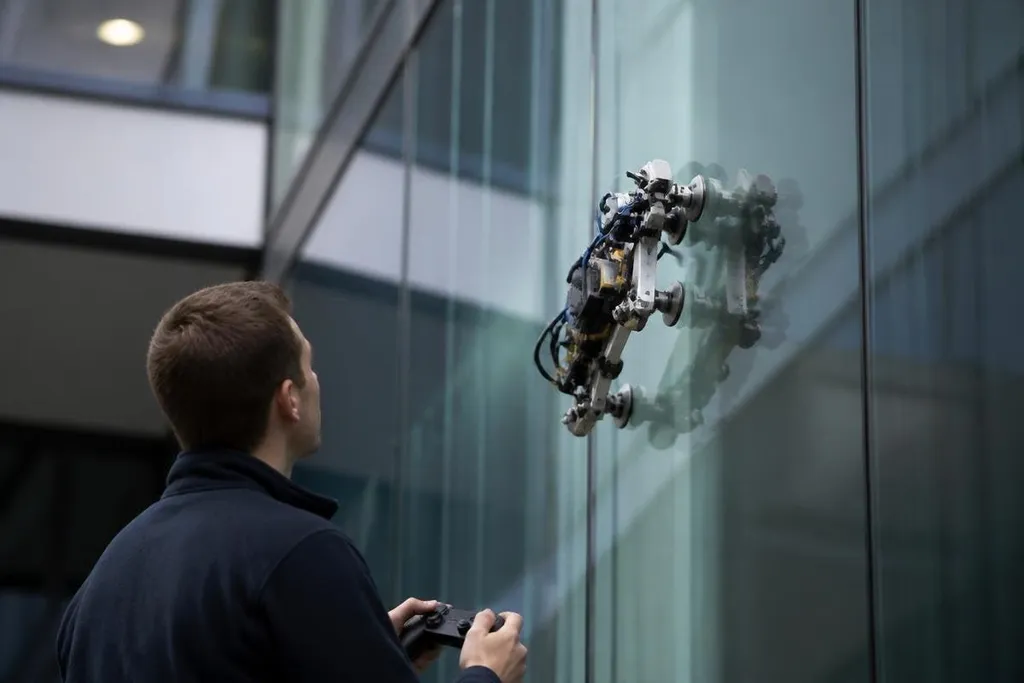
A fish turns by pushing water with its body. A gecko holds to glass through tiny surface forces. Bio-inspired robotics takes these physical ideas and turns them into machines for places where wheels, rigid arms, or standard grippers struggle.
- Soft robots bend, squeeze, and handle fragile objects.
- Legged robots spread their weight across uneven ground.
- Nature’s mechanics often matter more than an animal-shaped shell.
What bio-inspired robotics means
This field does not mean building an exact copy of an animal. Engineers study how a body moves, grips, senses, or saves energy, then adapt that method to a machine with a different job.
A robot may borrow the six-leg layout of an insect because six contact points can help it stay stable when the ground changes. Another may use a flexible arm because a rigid gripper can crush soft produce or fail to hold objects with uneven shapes.
The useful idea sits in the mechanism. A machine can copy a fish’s side-to-side motion for underwater travel without looking like a fish. It can copy a bird’s wing movement while using different materials, motors, and control software.
Where the designs help
Legs become useful when wheels lose contact with the ground. A walking robot can place each foot separately, step over gaps, and change its support pattern as it moves. That makes the design suitable for rough terrain, inspection work, and places where a smooth floor is not available.
Soft robotics takes a different route. Air pressure, cables, flexible materials, or small chambers can make a gripper close around an object instead of forcing it into a fixed shape. This matters in food handling, medical devices, and research tasks where contact must stay gentle.
Adhesion is another area where biology offers a useful model. A surface patterned after a gecko’s foot can create grip through many small contact points. The robot does not need glue, which can leave residue or lose its hold after repeated use.
These designs also change how engineers think about control. A rigid arm can follow a precise path, while a flexible arm may need sensors and software that respond to contact as the shape changes. The machine has to work with motion that is partly shaped by the object it touches.
Why the field is growing
Standard robot parts work well in controlled spaces. Warehouses, factories, and laboratories can give a machine a flat floor, fixed lighting, and repeatable object positions. Work outside those settings brings loose soil, damaged surfaces, irregular objects, and contact that is hard to predict.
Bio-inspired methods offer more ways to handle those conditions. A flexible body can absorb small errors. Several legs can keep moving after one foot slips. A fin or flexible tail can push against water without the exposed joints that a propeller system may need.
Smaller sensors can fit inside a flexible body, while control software can correct motion as the body bends. The useful test comes outside the lab, where Robot24.com reporting on bio-inspired robots can tie a design to a named machine and a result from field use before physical limits take over.
The limits are physical
Nature does not hand engineers a finished design. An insect can repair itself, grow, sense its surroundings, and use energy from food. A robot needs batteries, motors, wiring, software, and maintenance for each of those functions.
Soft parts can wear out. Flexible bodies can be harder to control than rigid ones. Legged robots may cross rough ground well while using more power than a wheeled platform on a flat floor. I’d choose a bio-inspired design only when its physical advantage matches the job.
The same rule applies to animal-shaped machines. A familiar body plan can help engineers test a motion, yet the shape alone does not prove that the robot works.
The useful measure is task performance: how much it carries, how long it runs, how often it needs help, and what happens when the environment changes.
A practical decision guide
Use these checks before choosing a bio-inspired robot for a project:
- Name the obstacle: identify the surface, object, or contact problem that blocks a standard robot.
- Match the mechanism: choose legs, flexible material, adhesion, or water propulsion for a physical reason.
- Check the trade-off: compare power use, control effort, repair needs, and task speed with a conventional design.
- Test the failure: see what happens after a slip, damaged surface, weak battery, or missed contact.
- Set the measure: record repeatable results such as cycle time, successful grips, distance, or load.
Bio-inspired robotics will keep growing where ordinary machine shapes meet difficult physical conditions. The open question is which designs can handle repeatable work after careful demonstrations, with clear limits and service costs that an operator can plan around.